Rebuilding After the Break: Finding Meaning Beyond Brain Injury
To start, please introduce yourself?
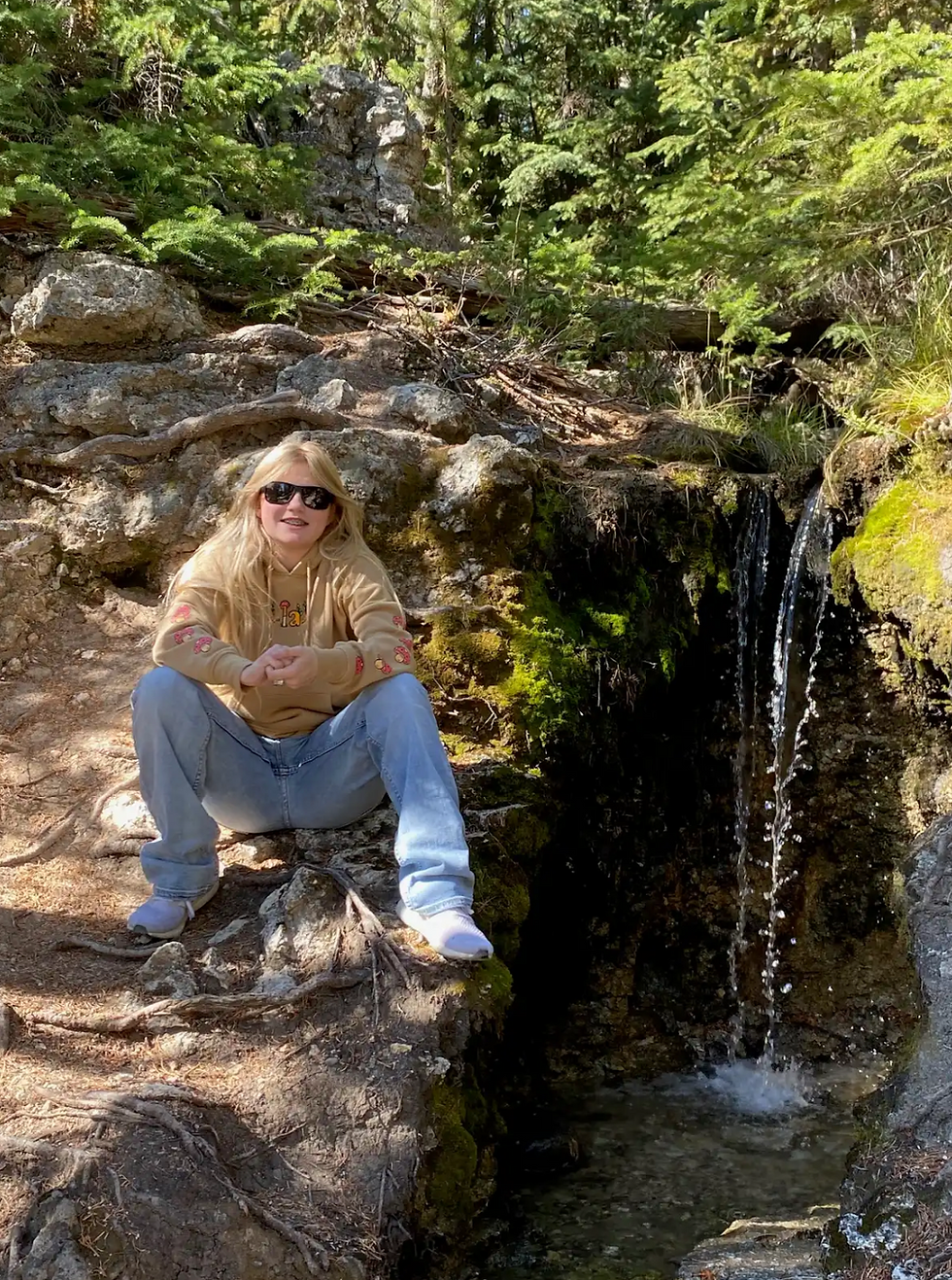
My name is Eryn Martin. I’m a brain injury survivor. On May 11th, 2020, I had a subarachnoid hemorrhage. They don’t really know why—it came out of nowhere. I was very healthy, no big history or anything pointing toward something like that happening. It actually happened while I was working out.
After my injury, I connected with a friend who had also had a TBI from getting hit by a car. So we started a podcast called Making Headway Podcast. We have three seasons out. The show focuses on survivor and practitioner interviews highlighting different challenges we all face and how others have navigated them. It was really therapeutic to do, but I got to a point where I felt like I couldn’t revisit the trauma every day. It can get to you. So it’s still out there if anyone wants to listen, but we’re not actively making it right now.

Could you tell us a little more about where you were before it happened, and where you are now?
Yeah. Before my injury, I was a nurse in New Hampshire, working full-time. COVID had just started, so everything was really stressful—we were all scrambling trying to figure out what we were doing. I had just gotten my master’s degree and was in the process of creating a new position, so there was a lot going on.
That day, I came home from work and felt like I needed to decompress, so I decided to work out. I had thought about going for a run, but it started raining, and I’m a fair-weather runner, so I didn’t. I ended up doing an online workout with my gym. Mid-punch, I felt something pop—like something gave way. I thought I had hurt my neck because the pain was so intense, but it turned out a blood vessel had ruptured at the base of my skull. It bled into my spine and up into my brain. Things progressed really quickly. At first I just knew something wasn’t right. I asked my partner to grab my blood pressure cuff because I could hear pounding and whooshing. Then I started vomiting and couldn’t get off the floor, and that’s when I knew we needed to call 911.
I was taken to a local hospital and then transferred to Boston, where I stayed for about nine days. It was right at the beginning of COVID, so I was completely alone the whole time. I appeared okay—I could walk and talk—but any movement was excruciating. Cognitively I was altered. I don’t think people really understood how severe it was until I got home and was around people who knew me.
It really just turns everything upside down. Some days you feel like you’re making progress, and other days you feel like you’ve slid backward. It’s been almost six years now, and I’m still figuring out what my new “steady state” looks like.
How did you transition into starting the podcast? And what did recovery and returning to work look like?
For the first few months, I wasn’t doing much at all. I couldn’t work for about four months, and I was doing home therapy because it was really hard to access inpatient or outpatient care during COVID. Toward the end of that initial recovery period, my friend and I started talking about doing a podcast, and we launched that fall—so about six months later. It honestly became part of my recovery. Nobody really tells you what you need after a brain injury. People say things like, “You look fine,” or “you’ll figure it out,” but that’s not the reality. When you start talking to other survivors and practitioners who actually specialize in brain injury, you learn so much more. Everything I was learning through the podcast, I was also applying in my own life. That was huge for me.
Going back to work was really bumpy. I tried for about five years to make it work. I went back to different roles, including ones I had done before. Cognitively, I’m still capable—but I’m slower. I process things more slowly, and I have trouble switching tasks. In a role like nursing, where you’re constantly managing multiple patients, that becomes really difficult. I could do the work, but the issue was fatigue. It would take so much out of me that I couldn’t recover. I’d be okay for a few months, then I’d crash and need time off. And that cycle just kept repeating.
So at this point, I’ve stepped back. I’m taking a break from my career, which I’m fortunate to be able to do. I don’t know exactly what comes next yet. I just know I don’t fit into the same box anymore, and I need to build something different.
You have such a unique perspective, having been both a provider and now a patient. Do you have any advice for navigating the medical system?
It’s incredibly challenging—even with experience. Until you find providers who truly understand and validate your experience, there can be a lot of dismissal and even gaslighting. I had to switch entire medical systems to be taken seriously. But once you find the right providers, it’s life-changing. I also learned to trust my gut. If something doesn’t feel right, it’s okay to question it. That applies not just to medical providers, but also to relationships. Brain injury changes relationships, and sometimes people are only meant to be in your life for a season.
That’s really powerful. I know you are also participating in the Voices of Brain Injury In Person Art Exhibition in New York, can you talk about your art and how it connects to your experience?
Art became an outlet during recovery. It actually started with coloring—that was part of my therapy. I couldn’t focus on a lot of words or numbers, but coloring gave me something to concentrate on without feeling overwhelmed. Over time, I started experimenting more. I wouldn’t say I go into it thinking I’m trying to express my brain injury—it’s more that something comes out, and afterward I’m like, oh… that means something. The piece I submitted was created in an open studio. They had all these materials, including broken glass. At first, I didn’t even know what I wanted to make. But I ended up creating a night scene—a full moon reflecting over water—using shattered glass. It wasn’t until afterwards that I realized the symbolism. That broken glass represents how you feel after a brain injury—shattered. But you can take those pieces and create something really beautiful. It looks different than before, but in some ways, it’s even more beautiful.
I just want to encourage anyone who’s in the middle of it right now. It can feel really overwhelming—especially when your identity was tied to what you did, and suddenly you can’t do that anymore. You start asking, who am I now? Recovery isn’t a finish line; it’s a journey. I used to hate hearing that, but it’s true. If you keep showing up for yourself every day, you will find a new kind of peace. For me, that also meant letting go of control and leaning back into my faith in God—trusting that there’s still something ahead for me. Because there is. Even if it doesn’t look like what you expected. I’ve had new relationships come into my life, and I have a baby on the way. There are still beautiful things ahead. I’ve had to stop trying to force myself back into what used to be—and be open to what’s next.